Implementation of a Centralised Planning and Project Management System -Part 1
Part 1 of 2
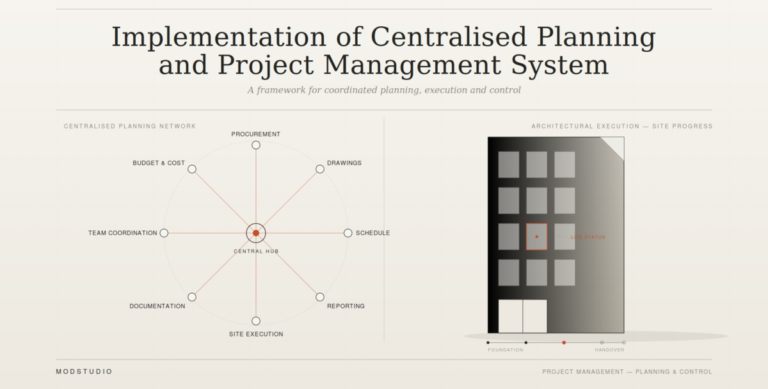
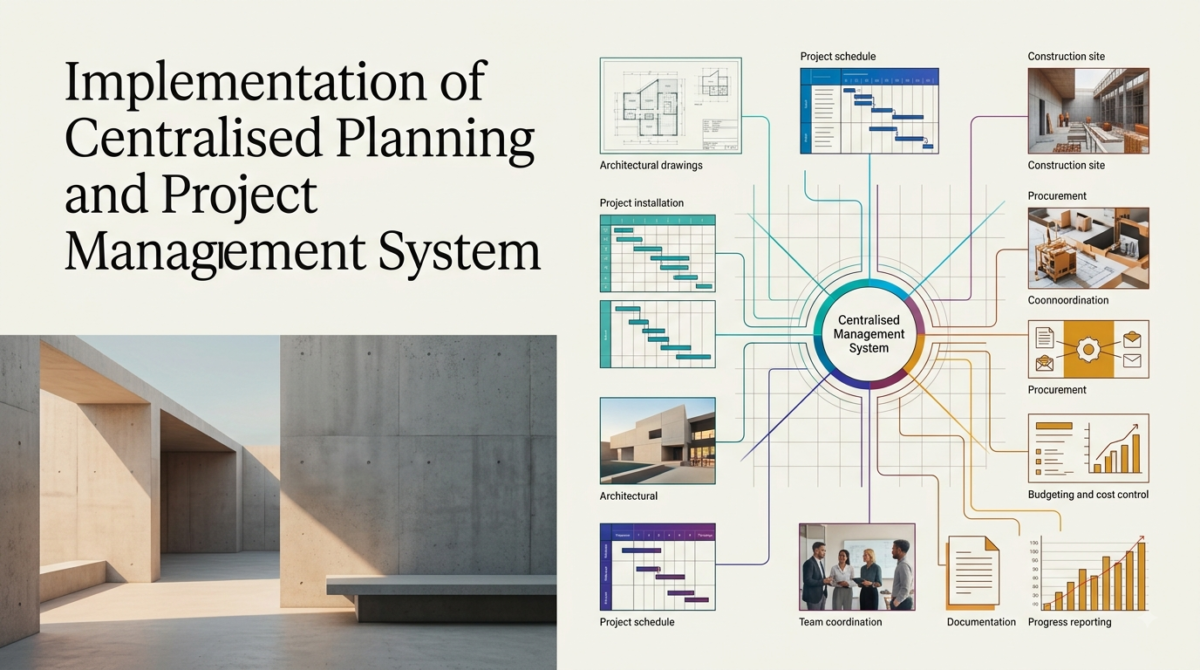
Implementation of a Centralised Planning and Project Management System
Enhancing Efficiency Through Centralised Access and Standardised Processes
Construction companies handling multiple projects often struggle with one recurring problem: fragmented data. Every site, every team, and every project manager tends to maintain their own trackers, checklists, and reports — usually in Excel, and usually in a format that suits only them. Over time, this creates silos of information that make it difficult for leadership to get a clear, real-time picture of what’s happening across the organisation.
This article outlines a practical framework for centralising project management — bringing consistency, accountability, and real-time visibility to how construction projects are planned, tracked, and audited.
In this first part, we look at the current state of project management systems, the challenges they create, and the goals and building blocks of a centralised system. Part 2 covers the standardised construction SOP, tendering process, transition plan, and team training.
Overview of Current Project Management Systems
Most construction organisations today rely on a mix of manual checklists and spreadsheet-based tracking. While this approach is familiar and low-cost, it comes with structural limitations:
- Manual checklists and trackers maintained independently by each site
- MS Excel used for individual project tracking — schedules, budgets, and tasks
- Limited centralised access across different projects
- Project data maintained in silos, often with redundancy and inconsistency, since each project keeps its own tracker and checklist
Existing Process
Teams update and manage their own data independently. As a result, project managers face real difficulty accessing real-time, unified data across all ongoing projects.
Challenges With the Current Approach
| Challenge | Impact |
|---|---|
| Fragmented Data | Difficulty obtaining a consolidated view of multiple projects, leading to delays and inefficiencies |
| Manual Errors | Excel-based tracking leads to human error, incorrect data entry, and missed updates |
| Lack of Real-Time Access | Project managers and senior leadership struggle to get real-time updates or insights |
| No Standardisation | Different teams use varying formats for trackers and checklists, leading to inconsistencies |
| Difficulty in Reporting | Generating consolidated progress reports across projects is time-consuming and prone to errors |
Goals of Centralising Project Management
Objective: Transition to a system where project data, timelines, resources, and budgets are easily accessible, standardised, and auditable.
Key Goals
- Centralised Access — Ensure all project stakeholders have real-time access to consolidated project data
- Consistency — Implement standardised processes and templates for tracking and reporting
- Error Reduction — Minimise manual errors by reducing reliance on scattered Excel files and checklists
- Real-Time Reporting — Facilitate easy and quick reporting at all levels of the organisation
- Better Decision-Making — Provide accurate, up-to-date information for stronger strategic decisions
Key Components of the Centralised System
1. Centralised Excel Tracking
- A consolidated master tracker or dashboard for all projects, giving access to key data such as timelines, budgets, and milestones
- Separate sheets within a single file, or linked files for each project, providing standardised data across the company
2. Standardised Checklists
- Project checklists built in a uniform format for planning, progress monitoring, and quality control
- Checklists customised for different project types — residential, commercial, and so on — while remaining standardised across the organisation
3. Centralised Reporting
- Simple tools such as Excel templates or shared spreadsheets for executive reporting, pulling key data from individual project trackers
- Pre-designed report formats for performance review, risk management, and budget tracking
4. Audit and Approval Process
- An audit trail for changes made in project trackers — recording who made the change, when, and what was updated
- A defined approval workflow to ensure critical project data, such as budgets and timelines, is reviewed before finalising
Centralised System Checklist and Audit Process
Define Standardisation Criteria
Develop standardised templates for all checklists and project trackers — including construction checklists, budget trackers, and weekly and monthly reports.
Centralised Repository
Choose a shared location for storing all files — a cloud-based system such as Google Drive, OneDrive, or an internal server works well.
Standardised Data Inputs and Version Control
Establish a uniform system for entering data across all projects, so figures and formats remain comparable company-wide.
Audit Process
Regular audits should be performed to ensure compliance with the system and to verify that each site adheres to its implementation.
Audit Frequency
| Audit Type | Description |
|---|---|
| Monthly Audit | Project managers and senior team members review tracker accuracy and compliance with company standards — budget, timelines, and progress |
| Quarterly Audit Review | External or internal auditors verify compliance with company standards |
| Yearly Audits | External or internal auditors conduct a comprehensive annual compliance review |
Continue reading in Part 2 : the standardised construction SOP and site checklist, tendering process, phased transition plan, and team training.