
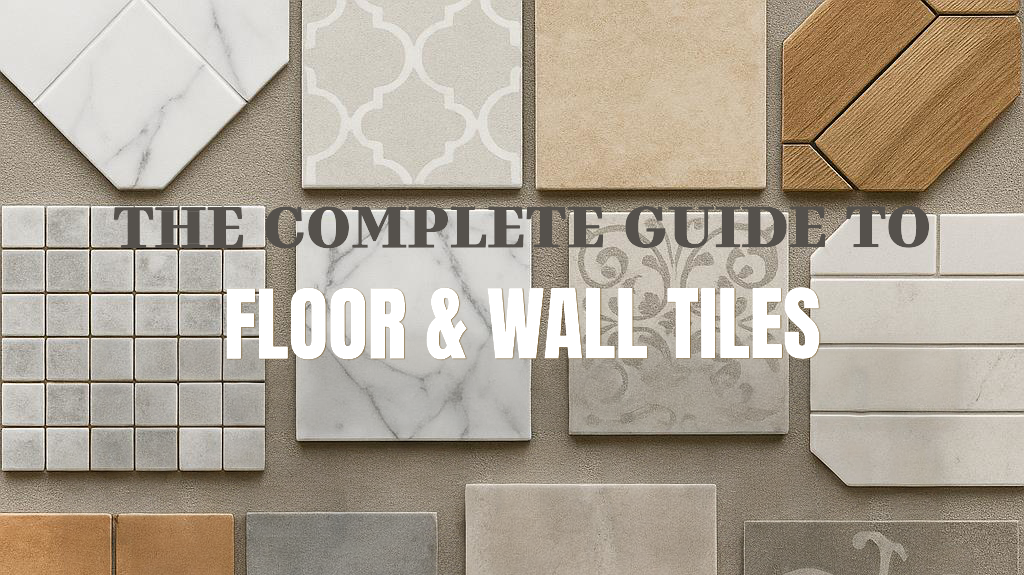
The Complete Guide to Floor & Wall Tiles
Home Décor & Construction
From classic Kota stone to Italian porcelain — everything you need to know before you tile your home, once and for all.
Whether you are building your dream home in Pune, renovating a flat in Delhi NCR, or simply replacing that cracked bathroom floor in your Mumbai apartment — the question of which tile to choose is never as simple as it looks. Walk into any tile showroom and you will find yourself surrounded by hundreds of options, each promising to be the best. So let us break it all down, properly, in plain language.
📄 In This Article
- Floor Tiles — Built to Be Walked Upon
- Wall Tiles — The Vertical Canvas of Your Home
- Special Tiles Worth Knowing About
- Indian Stone Tiles — A Category Unto Themselves
- Which Tile for Which Room?
- Maintenance Tips & Common Mistakes
Floor Tiles — Built to Be Walked Upon
Floor tiles are fundamentally different from wall tiles — they must withstand foot traffic, furniture weight, water spills, and in many Indian homes, the daily friction of chappals, mops, and pressure cookers being dragged across kitchen floors. The key technical rating to look for is the PEI rating (Porcelain Enamel Institute rating), which goes from 1 to 5. For Indian homes, always pick PEI 3 or above for living areas and PEI 4 for heavy-use areas like kitchens.
|
■ Ceramic Tiles Made from clay fired at lower temperatures. Affordable, easy to cut, and widely available. Best for low-traffic areas and bedrooms. Avoid in wet areas unless glazed. |
■ Porcelain Tiles Denser, harder, and more water-resistant than ceramic. Ideal for living rooms, kitchens, and bathrooms. The go-to choice for most modern Indian homes today. |
■ Vitrified Tiles An Indian market favourite! A type of porcelain tile with extremely low water absorption. Available in double-charged and full-body variants. Excellent for halls and drawing rooms. |
|
■ Natural Stone Tiles Marble, granite, Kota, sandstone — each with its own character. Timeless elegance but requires sealing and regular upkeep. Common in traditional and semi-luxury Indian homes. |
■ Mosaic Tiles Small tiles (usually under 5×5 cm) made from glass, ceramic, or stone. Used decoratively on floors, especially in bathrooms and pooja rooms for intricate patterns. |
■ Anti-Skid Tiles Not a material but a surface finish — matte, textured, or embossed tiles that reduce slipping. Absolutely essential for bathrooms, kitchen floors, and outdoor areas. |
✅ Pro Tip
In India, vitrified tiles dominate the market for good reason — they handle our humidity, cleaning agents like phenyl and floor cleaners, and heavy foot traffic better than most options. For budget builds, go for double-charged vitrified; for premium projects, full-body GVT (Glazed Vitrified Tiles) with 3D printing looks stunning.
Wall tiles do not bear load, so they can be lighter, thinner, and more decorative than floor tiles. However, they must adhere properly to the wall and be suitable for moisture if installed in wet areas. In India, the most common wall tile zones are bathrooms, kitchens, and sometimes living room feature walls.
|
■ Glazed Ceramic Wall Tiles The most traditional wall tile. Smooth, easy to clean, available in endless colours and prints. Standard in Indian bathrooms since the 1980s. Usually 30×45 cm or 30×60 cm. |
■ Subway Tiles Rectangular tiles (typically 7.5×15 cm) laid in brick patterns. Trending heavily in urban Indian kitchens for that café-inspired look. Clean, modern, and timeless together. |
■ Glass Tiles Translucent or coloured glass tiles that reflect light beautifully. Popular for kitchen backsplashes and bathroom accent walls. Slightly tricky to install — needs an expert hand. |
|
■ Terracotta Wall Tiles Earthy, warm, and very desi! Unglazed terracotta gives an organic, rustic feel. Excellent for feature walls in homes going for a Rajasthani or Mediterranean aesthetic. |
■ 3D Textured Wall Tiles Wall tiles with raised geometric or floral patterns that create shadow and depth. Used as accent walls behind sofas, TV units, or in master bedrooms for visual drama. |
■ Digital Print Tiles Modern inkjet technology allows photorealistic prints on tiles — wood grain, marble, fabric textures, artwork. Very popular in Indian homes wanting marble looks at ceramic prices. |
In Indian interior design, the wall tile is no longer just a background — it has become the statement. Today, a single accent wall with the right tile can define the character of an entire room.
· · ·
Beyond the standard categories, several specialty tiles have carved their own niche — especially in the premium and boutique segment of the Indian market.
Remark
Large format tiles (above 60×60 cm) have become the new aspirational standard in Indian luxury housing. Fewer grout lines mean easier cleaning — which any Indian homemaker will tell you is a blessing. However, they require a perfectly levelled substrate and skilled installation.
India is extraordinarily blessed with natural stone, and many of these have been used as flooring for centuries. They deserve their own section entirely.
|
▬ Kota Stone From Kota, Rajasthan. Blue-grey limestone tile, very hard-wearing. The workhorse of Indian construction — used in everything from school corridors to government offices. Affordable and practical. |
■ Red Agra Stone Warm sandstone from the Agra region. Beautiful in outdoor areas, pathways, and courtyard-style homes. Very Mughal-inspired in character. Needs regular sealing. |
○ White Makrana Marble The marble used in the Taj Mahal itself. Pure white, lustrous, and undeniably luxurious. Common in premium Indian homes but requires careful maintenance to avoid staining. |
|
■ Green Marble (Rajasthan) Stunning green-veined marble from Udaipur and Rajsamand. Creates a bold, heritage-inspired statement. Often used in temple flooring and heritage hotel lobbies. |
■ Kadappa Black Stone Dark limestone from Andhra Pradesh. Sleek, contemporary, and pairs beautifully with light-coloured grout. Popular in South Indian homes and modern kitchens. |
■ Granite (Indian varieties) India is one of the world’s largest granite producers. Black Galaxy, Absolute Black, and Rosy Pink are internationally exported. Extremely hard, stain-resistant, and very low-maintenance. |
⚠ Important
All natural stone — marble, granite, sandstone, Kota — is porous to varying degrees. Do not skip the sealing step. In Indian climates with high humidity and monsoon moisture, unsealed stone can develop stains, moss, and structural damage over time.
· · ·
This is the most practical question — and the one most people get wrong by choosing tiles based purely on looks without considering function.
| Room / Area | Recommended Tile | What to Avoid |
|---|---|---|
| Living / Drawing Room | Polished porcelain, GVT, marble | Highly textured anti-skid (hard to clean) |
| Master Bedroom | Wood-look planks, matte ceramic, marble | Glossy tiles (cold underfoot, slippery) |
| Kitchen Floor | Anti-skid porcelain, full-body vitrified | Light marble, polished tiles (stain easily) |
| Kitchen Wall (Dado) | Glazed ceramic, subway tiles, glass mosaic | Matte porous tiles (absorb cooking grease) |
| Bathroom Floor | Anti-skid ceramic, penny mosaic, stone | Polished or glazed smooth tiles (dangerous!) |
| Bathroom Wall | Glazed ceramic, glass, 3D textured | Terracotta (absorbs moisture over time) |
| Outdoor / Balcony | Anti-skid porcelain, Kota stone, granite | Polished marble, glossy ceramic |
| Pooja Room | White marble, Makrana, mosaic patterns | Dark heavy tiles (feel inharmonious) |
Tiles are a long-term investment. Unlike paint or wallpaper, you cannot change them every two years. Getting the care right from day one makes all the difference.
✅ Do This
Always use a pH-neutral cleaner on natural stone tiles. Acidic cleaners like lemon-based products or even tamarind water (used in South Indian kitchens) will etch marble surfaces permanently. For vitrified tiles, a simple mop with warm water is usually sufficient — no fancy cleaners needed.
💡 Grout Matters More Than You Think
The most neglected part of any tile installation is the grout. In Indian bathrooms, mould and discolouration almost always start in the grout lines. Use epoxy grout in wet areas — it is more expensive but non-porous and virtually mould-proof. In living areas, matching grout colour to the tile creates a seamless, expansive look.
⚠ Common Mistakes to Avoid
Do not skip the expansion joints in large tiled areas — tiles expand with heat, especially on terrace and balcony floors in Indian summers. Skipping this step leads to tiles popping and cracking within 2–3 years. Also, always buy 10–15% extra tile to account for breakage during installation and future repairs.
Quick Reference — Tile Applications
Use these quick labels to remember which tiles work where:
Floor Only Wall Only Floor & Wall Ceramic Porcelain / Vitrified Glass Tiles 3D Textured Anti-Skid Kota Stone Marble / Granite Terrazzo Mosaic